

Executive Summary
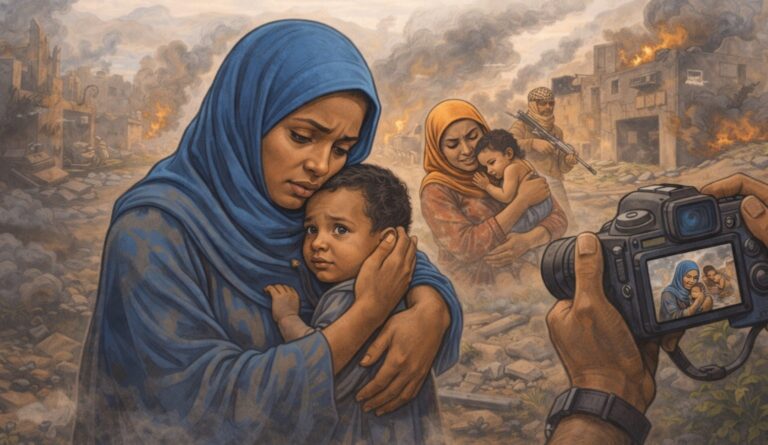
Sudan presents one of the world’s most complex transitional justice challenges. Decades of authoritarian rule under President Omar al-Bashir, the Darfur atrocities, the 2019 Khartoum massacre, and the devastating war that erupted in April 2023 have produced an enormous backlog of unaddressed violations.
The war has been accompanied by massive violations of international humanitarian law, with the Biden administration formally determining that war crimes, crimes against humanity, and genocide have taken place — a rare and significant step. (Verfassungsblog)
Yet hardly any major perpetrators have faced justice.
Key Findings
- A Persistent Culture of Impunity
Impunity, and the persistence — indeed rise — of alleged perpetrators, is a key dimension of the current conflict. Many in Sudan associate transitional justice primarily with criminal justice, rather than also addressing the structural dimensions of atrocities, which has created uncertainty, resentment, and fear among armed actors and survivors alike. (Verfassungsblog)
- Failed Transitions Undermine Progress
Sudan has a rich history of engaging with transitional justice — from truth-telling and reparations to criminal accountability — but the discrepancy between aspirations and concrete results is stark. It tells the story of Sudan’s failed transition: a paradox of transitional justice without any genuine transition, marked by asymmetrical power relations and impunity for violent actors. (African Arguments)
- Political Elites as the Key Obstacle
Justice requires political courage, judicial independence, and that those responsible are no longer key players. In Sudan, important military members of the old regime remain embedded in transitional government structures, making accountability extremely difficult to deliver. (CMI)
- The “Soft Landing” Risk
Some associate transitional justice in Sudan with a “soft landing” approach, where perpetrators go free after making superficial commitments to peace and human rights, receiving legitimacy to remain in positions of power or join the dominant kleptocratic system for their own benefit. (Verfassungsblog)
- Justice Must Be Transformative, Not Transactional
The ultimate measure of success must be how transformative any process is for Sudan — integrating justice with wider political, social, and economic reforms that address the root causes of recurring authoritarian rule, including inequality and discrimination. (African Arguments)
Three Practical Recommendations
Recommendation 1: Establish an Inclusive, Victim-Centred Truth and Reparations Framework
Women, youth, and marginalised groups — the driving forces of Sudan’s revolution — must be at the cornerstone of any transitional justice process. So long as they are excluded from decision-making, whether by institutional, cultural, or practical barriers, any process will lack legitimacy. (Redress)
Reparations programmes must be structured carefully to avoid creating unjust hierarchies among victims while remaining economically viable.
Recommendation 2: Sequence Accountability Mechanisms Realistically
Drawing on Latin American lessons, accountability processes should be built in stages. Prioritise documentation and evidence preservation now, establish an independent Special Court for Darfur and other atrocities (as committed to in the 2020 Juba Peace Agreement), and pursue criminal prosecutions as political conditions allow — targeting the most responsible individuals first to maximise credibility and manageability.
Recommendation 3: Embed Transitional Justice within Broader Security and Institutional Reform
The 2019–21 transition holds a critical lesson: key legislative and institutional reforms — especially security sector reforms — were delayed, which ultimately contributed to the collapse of the process. (African Arguments)
Any new transitional justice programme must be delivered in parallel with verified security sector reform, judicial independence, and anti-corruption measures, not treated as a standalone workstream.
Conclusion
Sudan’s path to justice is long but not impossible. Success depends on sustained international pressure, inclusive civil society participation, and political will to break, rather than perpetuate, cycles of impunity.
As project managers and stakeholders, we must design accountability mechanisms that are credible, sequenced, and structurally transformative — not performative gestures that leave root causes intact.